
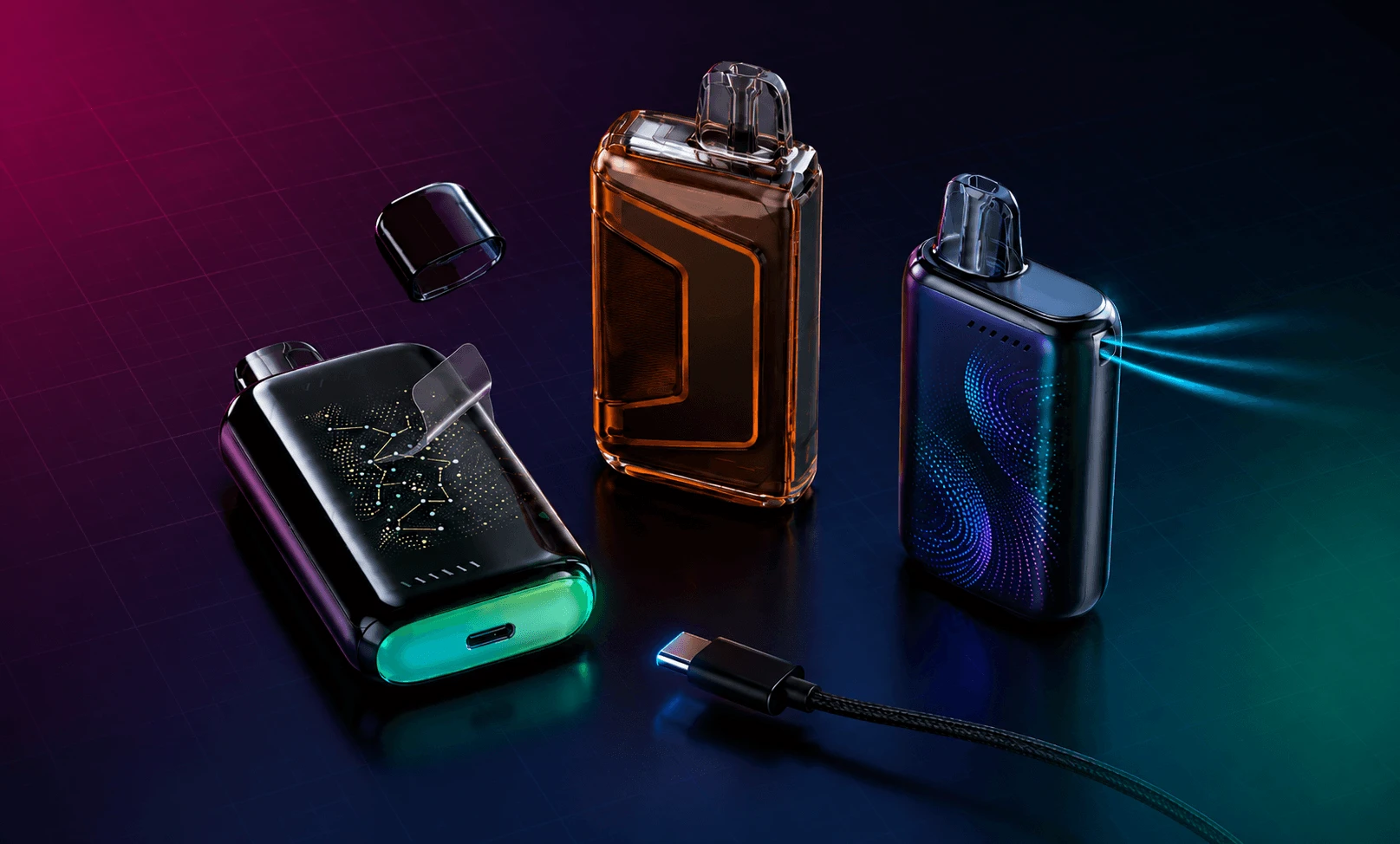
If your brand-new disposable vape is not working, your first step is to check for protective stickers, silicone plugs, blocked airflow, and your device’s battery status. If your vape is rechargeable, charge it according to the manufacturer’s instructions and test it again. If your airflow is clear and your device still does not produce vapor, your vape may be defective and should not be opened or modified.
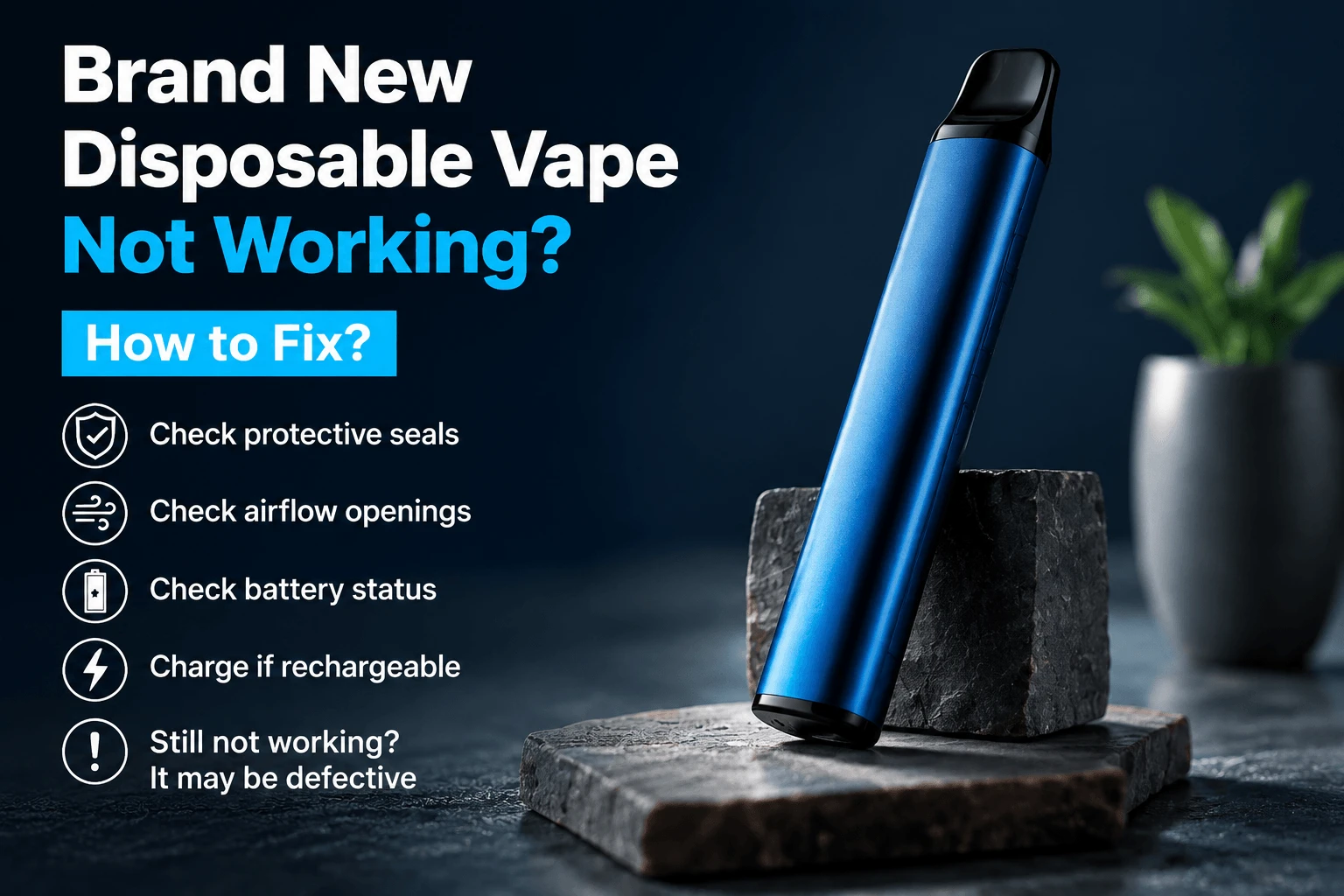
Our guide helps you work through the safest checks first, so you can identify whether your problem comes from packaging, airflow, power, the coil, or the device itself.
Explore Our Categories
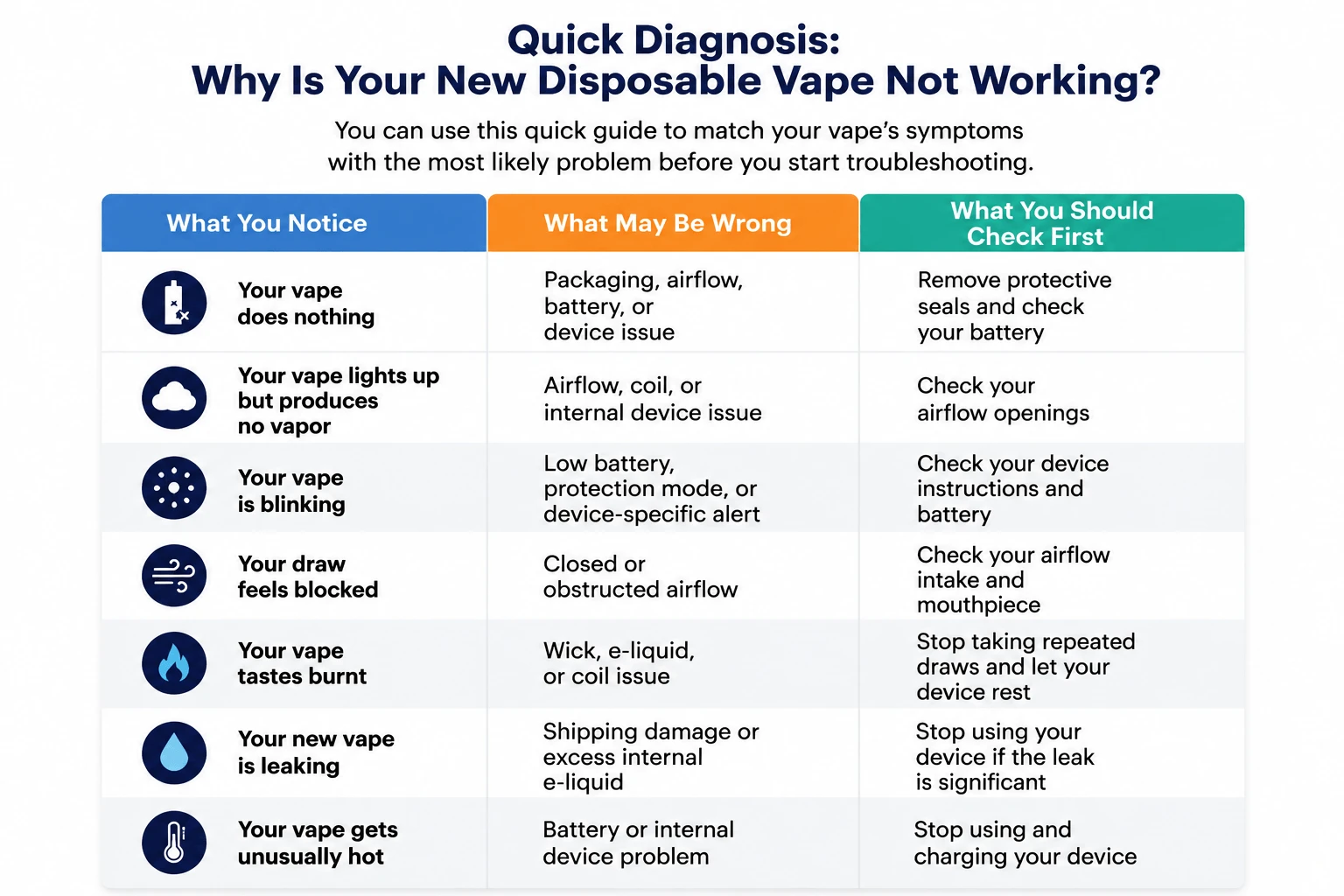
Quick Diagnosis: Why Is Your New Disposable Vape Not Working?
You can use this quick guide to match your vape’s symptoms with the most likely problem before you start troubleshooting.
| What You Notice | What May Be Wrong | What You Should Check First |
|---|---|---|
| Your vape does nothing | Packaging, airflow, battery, or device issue | Remove protective seals and check your battery |
| Your vape lights up but produces no vapor | Airflow, coil, or internal device issue | Check your airflow openings |
| Your vape is blinking | Low battery, protection mode, or device-specific alert | Check your device instructions and battery |
| Your draw feels blocked | Closed or obstructed airflow | Check your airflow intake and mouthpiece |
| Your vape tastes burnt | Wick, e-liquid, or coil issue | Stop taking repeated draws and let your device rest |
| Your new vape is leaking | Shipping damage or excess internal e-liquid | Stop using your device if the leak is significant |
| Your vape gets unusually hot | Battery or internal device problem | Stop using and charging your device |
Your vape model may use different lights, displays, airflow systems, or charging indicators, so your manufacturer’s instructions should always take priority when they provide device-specific guidance.
Why Is Your Brand-New Disposable Vape Not Working?
Your brand-new disposable vape may not work because your protective packaging is still attached, your airflow is blocked, your rechargeable battery needs power, your draw sensor is not activating correctly, or your device arrived defective.
You should start with simple external checks before assuming your disposable has failed.
Your Protective Stickers or Plugs Are Still Attached
Your new disposable vape may arrive with silicone plugs, mouthpiece covers, stickers, or seals that protect your device during shipping. If one of these covers your airflow intake or mouthpiece, your vape may feel completely unresponsive, even though nothing is actually wrong with it.
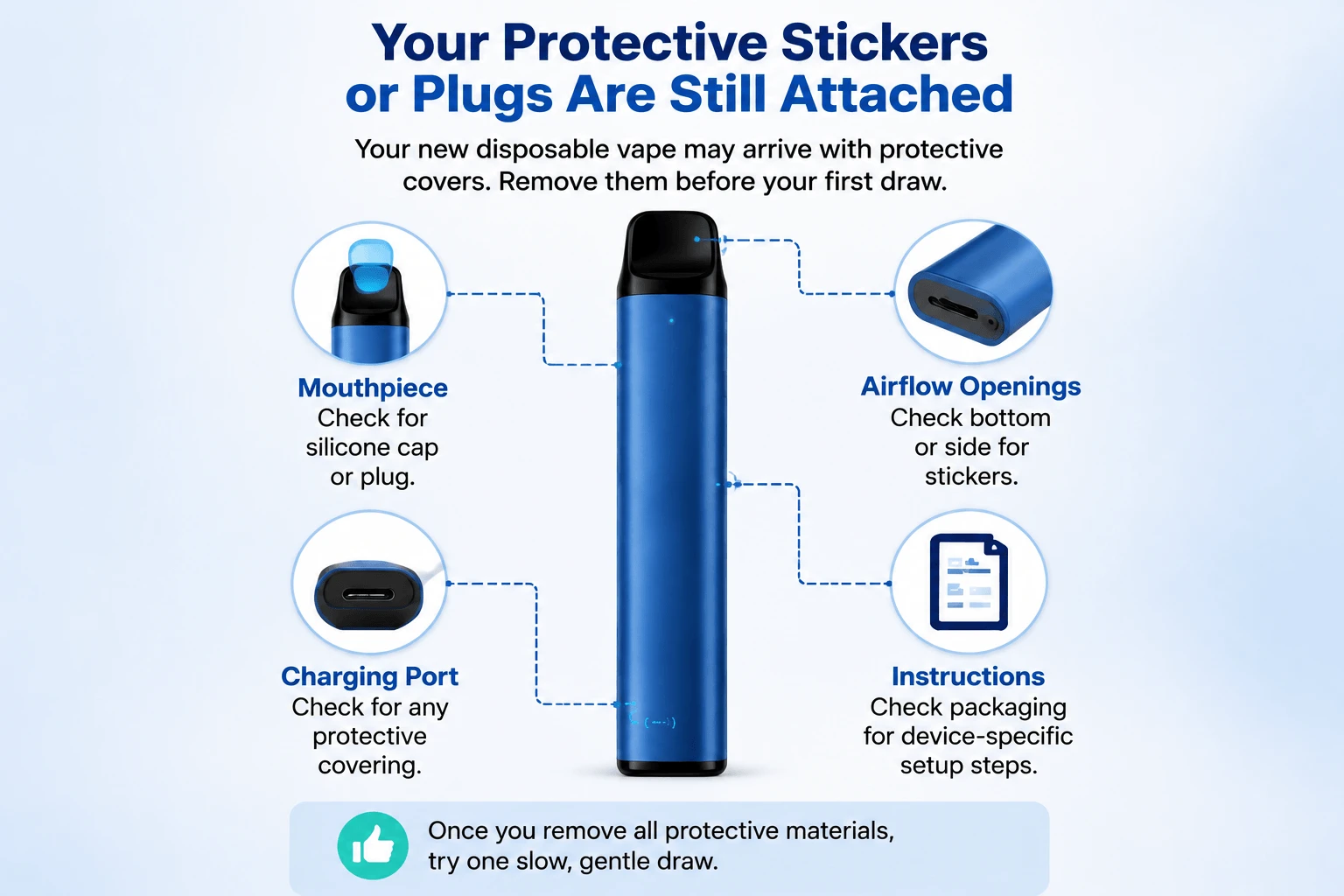
Before your first draw, check:
- Your mouthpiece is for a silicone cap or plug.
- Your bottom or side airflow openings for a sticker.
- Your charging port should be protected from any protective covering.
- Your packaging for device-specific setup instructions.
Once you remove your protective materials, try one slow, gentle draw.
Your Airflow Is Blocked or Closed
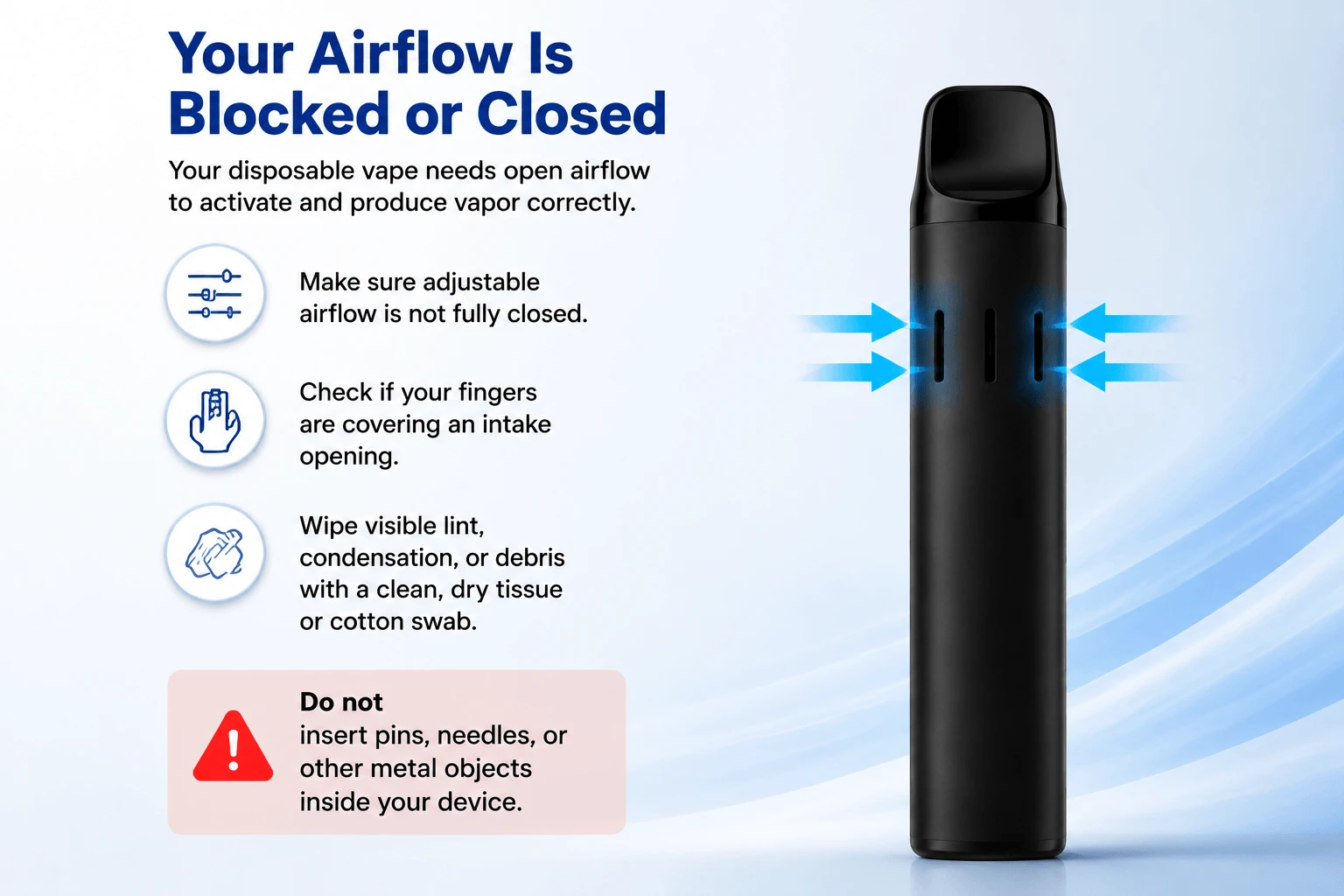
Your disposable vape needs open airflow to activate and produce vapor correctly. If your device has adjustable airflow, make sure your airflow slider is not fully closed. You should also check whether your fingers are accidentally covering an intake opening while you hold your vape.
Your airflow can also become restricted by visible lint, condensation, or debris around your mouthpiece or intake. Use a clean, dry tissue or cotton swab to wipe only the areas you can easily reach. You should not push pins, needles, or other metal objects deep inside your device.
Your Rechargeable Battery Needs Power
If your new disposable vape is rechargeable, your battery may need charging before your device works normally.
Check your display, LED, or battery indicator if your vape has one. Then charge your device only according to its manufacturer’s instructions. Your disposable may use USB-C or another charging connection, but you should confirm your specific model rather than assuming every disposable uses the same charging method.
If your vape is not designed to be rechargeable, you should never attempt to charge it.
The FDA recommends following your vape manufacturer’s instructions for battery use and charging, and keeping charging devices away from materials that can easily catch fire.
Your Draw Sensor May Not Be Activating
Many disposable vapes are draw-activated, which means your device detects your inhale instead of using a firing button. If your airflow is too restricted or your draw is unusually weak, your sensor may not activate as expected.
After checking your airflow, take one slow and steady draw. You do not need to inhale aggressively. If your airflow feels normal but your device still gives you no response, move on to your battery and device checks instead of repeatedly pulling harder.
Your Coil or E-Liquid System May Have a Problem
If your device turns on but you still get no vapor, your issue may involve the coil, wick, e-liquid delivery, or another internal component. Your safest option is to avoid opening your sealed disposable.
You can stand your vape upright for several minutes and try another gentle draw. If your device still activates without producing vapor, your vape may have an internal fault that you cannot safely correct from the outside.
Your Disposable Vape May Have Arrived Defective
If your packaging is removed, your airflow is open, your rechargeable battery has power, and your device still does not work, your disposable may have arrived defective.
Your best next step is to stop troubleshooting internally and contact your retailer or manufacturer.
Keep your packaging, order information, device name, and any available batch or serial details because your retailer may need this information when reviewing your issue.
How Do You Fix a Brand-New Disposable Vape That Is Not Working?
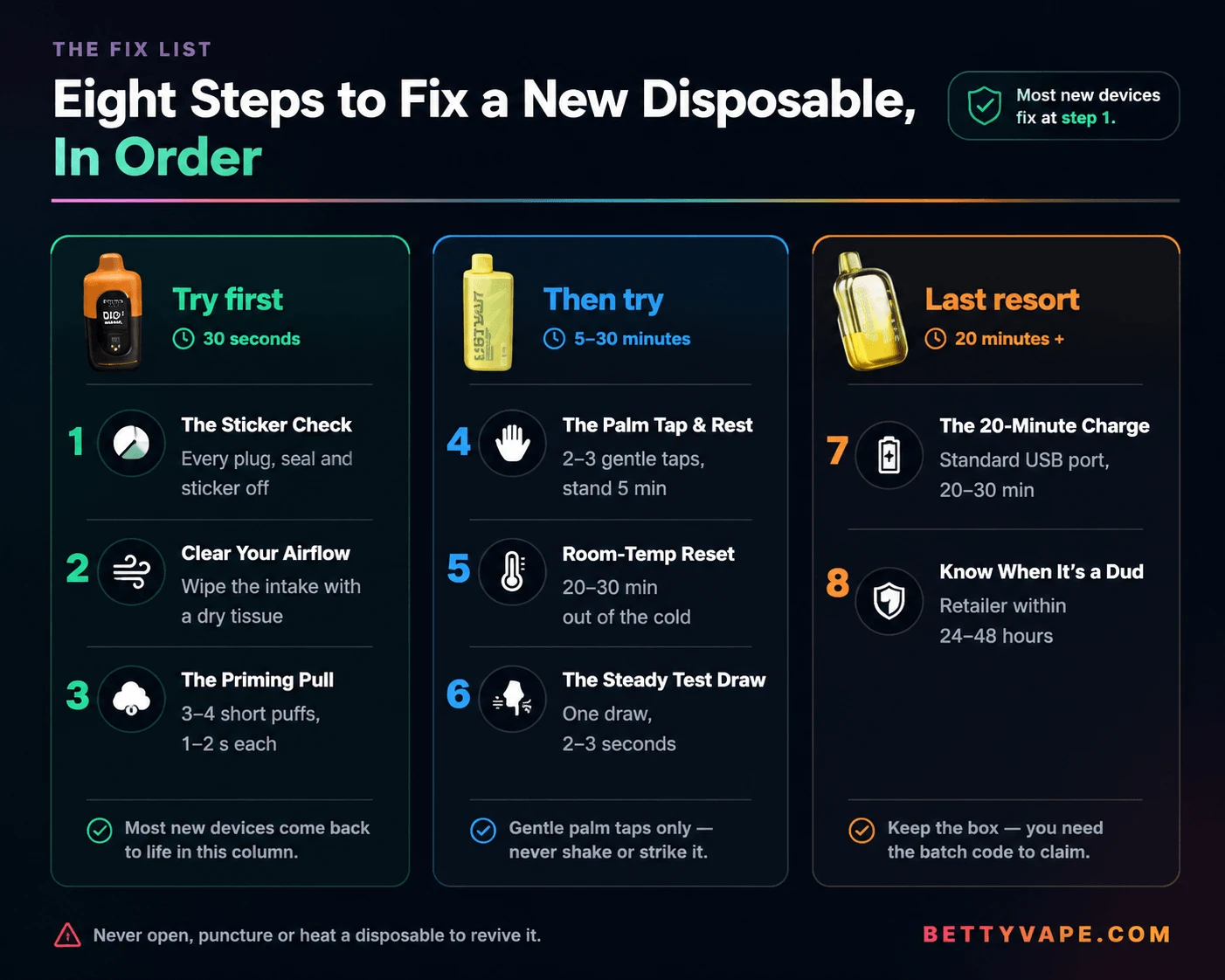
Your best troubleshooting process starts with your easiest and safest checks before moving to power or device-level problems.
1. Remove All Protective Packaging
Check your mouthpiece, base, airflow holes, charging area, and outer packaging.
Your first goal is to make sure no sticker, silicone cover, or protective seal is preventing normal airflow.
Once everything is removed, take one gentle test draw.
2. Check Your Airflow Openings
Look around your device for small intake openings or an adjustable airflow slider. Make sure your airflow is open, and your fingers are not covering it while you hold your vape.
If you see lint, dust, or moisture around your intake or mouthpiece, wipe the visible area with a clean, dry tissue.
3. Keep Your Device Upright
If your vape has been stored on its side during shipping or delivery, keep your device upright for several minutes.
Your goal is to let any visible moisture or internal e-liquid settle naturally before you test your vape again. You should not shake, strike, squeeze, or aggressively tap your device.
4. Let Your Vape Reach Room Temperature
If your disposable has been sitting in a very cold or hot environment, allow your device to return to a comfortable room temperature naturally before using or charging it.
You should never try to heat your vape with a lighter, microwave, stove, hair dryer, or any other direct heat source. Your vape contains electronic components and a battery, so gentle storage and handling are the safer approach.
5. Try a Slow, Steady Draw
After your packaging and airflow are checked, take one slow draw. Your draw should be steady rather than extremely forceful.
If your device begins working normally, your original problem was likely related to airflow or activation rather than a failed device.
6. Check Your Battery If Your Vape Is Rechargeable
If your airflow feels normal but your vape still does not activate, check your battery display or LED. Connect your rechargeable disposable only according to your device instructions, then test it again after charging.
You should stop charging your device if you notice visible damage, unusual heat, swelling, melting, or any other abnormal condition. FDA guidance notes that vape battery problems can involve overheating, fire, or explosions, which is why correct handling and charging matter.
7. Stop If Your Device Still Does Not Work
If your airflow is open, your packaging is removed, and your rechargeable battery has power, but your vape still does not work, your device may be defective.
At this point, your safest option is to contact your retailer or manufacturer rather than opening the device.
What Does Your Disposable Vape Light Mean?
Your vape’s light can help you narrow down your problem, but your exact light pattern depends on your device.
A solid light, blinking light, changing color, or screen warning can mean different things between brands and models. Your first step should always be to check your manufacturer’s instructions when your device uses a specific blinking sequence or error indicator.
Your Vape Blinks When You Try to Hit It
If your vape blinks when you inhale, your device may be indicating a low battery, a protection feature, a charging condition, or another device-specific issue. If your disposable is rechargeable, check your battery level first.
If your battery is charged and the same blinking pattern continues, your device instructions or manufacturer support should help you identify the exact warning.
Your Light Turns On, but You Get No Vapor
If your vape lights up but produces no vapor, your device may be detecting your draw while another issue prevents normal vapor production. Check your airflow first.
If your airflow is clear and your battery has sufficient power, your coil, e-liquid system, or another internal component may not be functioning correctly.
You should avoid opening your disposable to investigate internal wiring or components.
Your Vape Has No Light or Response
If your vape has no light, screen response, or vapor, start with your protective packaging and airflow. If your device is rechargeable, check your battery next.
If your vape remains completely unresponsive after those steps, your device may have arrived defective.
What Should You Avoid When Your New Disposable Vape Is Not Working?
Your troubleshooting should stay on the outside of your device. You should avoid aggressive fixes that can turn a minor airflow or battery problem into physical damage.
For your safety, you should:
- Avoid prying your disposable vape open.
- Avoid puncturing, crushing, or squeezing your device.
- Avoid inserting pins, needles, or metal tools deep into your mouthpiece.
- Avoid repairing your device’s internal wiring or battery yourself.
- Avoid charging your vape if your model is not rechargeable.
- Avoid using damaged charging cables or ports.
- Avoid direct heat from a lighter, stove, microwave, or similar source.
- Avoid continuing to use your vape if it becomes unusually hot, swollen, cracked, or severely damaged.
- Avoid repeatedly taking extremely hard draws when your airflow remains blocked.
Your manufacturer should be your first source for model-specific operation and battery instructions, and your retailer should be your next contact when a brand-new device appears defective. FDA battery-safety guidance likewise recommends understanding your specific device and following the manufacturer’s use and care recommendations.
How Do You Know If Your New Disposable Vape Is Defective?
Your disposable vape may be defective if you have removed all protective packaging, confirmed your airflow is open, checked your rechargeable battery, and your device still will not activate or produce vapor.
You should also stop troubleshooting if your brand-new vape:
- Arrived visibly damaged.
- Leaks heavily from your device’s body.
- Produces unusual heat.
- Appears swollen or misshapen.
- Has a damaged charging port.
- Repeatedly shows an error despite a normal setup.
- Activates but never produces vapor after your basic checks.
Your next step should be to keep your proof of purchase and contact your retailer or manufacturer for the appropriate support or replacement process.
How Can You Reduce Problems With Your Next Disposable Vape?
Your storage and handling habits can help you avoid several common disposable-vape problems.
Check Your Device Before Your First Draw
Your first check should include the mouthpiece, airflow openings, packaging, body, and charging port. If your vape looks damaged before you use it, contact your retailer instead of testing a visibly compromised device.
Keep Your Vape Upright When Possible
Your disposable may spend time on its side during shipping, but you can keep your device upright once it is in your possession.
Your upright storage also makes it easier for you to notice visible leakage around your mouthpiece or base.
Keep Your Airflow Openings Clean
Your pocket, bag, or storage area can expose your vape to lint and debris.
Check your mouthpiece and external airflow openings occasionally and wipe visible buildup with a clean, dry tissue.
Protect Your Device From Extreme Temperatures
Your vape should not be left for long periods in very hot or freezing environments.
FDA battery-safety guidance recommends protecting your vape from extreme temperatures and avoiding charging it under extreme-temperature conditions.
Follow Your Device’s Charging Instructions
If your disposable is rechargeable, your manufacturer’s charging instructions should guide your cable, charging setup, and device care.
Your safest approach is to avoid guessing when your model’s charging requirements are unclear.
When Should You Stop Troubleshooting Your Disposable Vape?
You should stop troubleshooting when your basic external checks do not solve your problem or when your device shows signs of physical or battery-related damage.
If your disposable is unusually hot, swollen, cracked, heavily leaking, or visibly damaged, you should stop using and charging it.
If your vape simply remains unresponsive after your packaging, airflow, and battery checks, contact your retailer or manufacturer rather than attempting an internal repair.
Your goal is to identify a simple setup issue without turning your disposable vape into a damaged device.
Frequently Asked Questions
Why Is My Brand-New Disposable Vape Not Working?
Your brand-new disposable vape may not be working because your protective packaging is still attached, your airflow is blocked, your rechargeable battery needs power, or your device is defective. Check your packaging and airflow first, then check your battery if your vape is designed to be rechargeable.
Why Is My New Disposable Vape Not Hitting, but the Light Is On?
If your vape’s light turns on but you get no vapor, your device may be activating while your airflow, coil, e-liquid system, or another internal component is not working normally. Check your airflow openings first, and contact your retailer if your device still produces no vapor.
Why Is My New Disposable Vape Blinking?
Your new disposable vape may blink because your battery is low, your device has entered a protection mode, or your model is displaying another device-specific alert. Check your manufacturer’s instructions because blinking patterns and light colors can mean different things between vape models.
Can You Fix a Brand-New Disposable Vape That Is Not Working?
Yes, you can sometimes fix a new disposable vape when your issue comes from protective packaging, blocked airflow, a closed airflow setting, or a low rechargeable battery. You should not open your device or attempt to repair your internal battery, coil, or wiring.
Why Is My Disposable Vape Not Working After Charging?
If your disposable vape is not working after charging, check your airflow, protective seals, charging connection, and device indicators. If your rechargeable battery has power but your device still does not activate, your vape may have an internal fault and should be checked with your retailer or manufacturer.
Why Is My Brand-New Disposable Vape Not Producing Smoke?
Your disposable vape produces an aerosol, commonly called vapor, rather than smoke. If your new device produces no vapor, check your protective packaging, airflow, rechargeable battery, and device activation before assuming your vape is defective.
How Do You Know If a Disposable Vape Is Dead or Defective?
Your disposable may be defective if your brand-new device has open airflow and sufficient battery power but still gives you no normal activation or vapor. If your vape has already been used for an extended period, an empty e-liquid supply or depleted battery may instead indicate that your device has reached the end of its usable life.
Should You Open a Disposable Vape That Is Not Working?
No. You should not open a sealed disposable vape to troubleshoot your battery, wiring, coil, or other internal components. Your safer option is to complete the external checks in our guide and contact your retailer or manufacturer if your device still does not work.
Final Takeaway
If your brand-new disposable vape is not working, your best approach is to start with your packaging, airflow, and battery before assuming your device has failed.
Remove your protective plugs and stickers, make sure your airflow is open, keep your device upright, and charge your vape only if your model is specifically designed to be rechargeable.
If your vape still does not work after your basic checks, do not pry it open or attempt an internal repair. Your device may have arrived defective, and your retailer or manufacturer should be your next point of contact.
Our goal at Betty Vape is to help you understand your device before you decide what to do next. When your troubleshooting is simple, keep your fix simple. When your device shows signs of damage or continues to fail, your safer choice is to stop using it and seek product support.
Nicotine is an addictive chemical. These products are intended for adults of legal age only.
Want to know more about troubleshooting your disposable vape? Visit our blog section, email us at support@bettyvape.com, or call (470) 404-6460. Our expert support team is here to help.